

Are You Eating Enough Protein After 40?
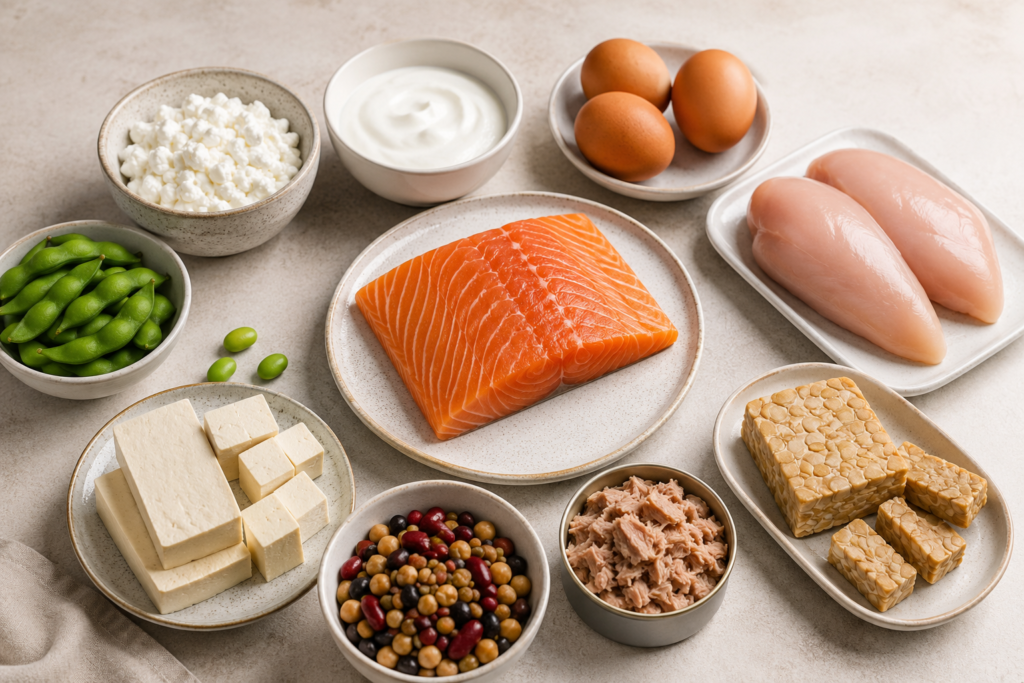
Most people hear the word protein and think about building muscle. But protein does much more than help you build or maintain it.
When you eat protein, your body breaks it down into amino acids and uses them to make the proteins it needs to function.
- Enzymes speed up thousands of chemical reactions, including those involved in digesting food. Some hormones carry messages between cells and coordinate processes throughout the body. Antibodies help your immune system identify and respond to bacteria, viruses, and other foreign substances.
- Hemoglobin carries oxygen through your bloodstream.
- Albumin helps maintain fluid balance in your blood vessels and transports substances throughout the body.
- Collagen and elastin provide structure to your skin, tendons, ligaments, blood vessels, and organs.
Protein isn’t one substance performing one job. It plays a role in the structure, function, and regulation of nearly every part of your body.
Why Muscle Deserves More Attention After 40
All of those functions matter throughout your life, but maintaining muscle becomes more important as you get older.
Muscle allows you to get out of a chair, climb stairs, carry groceries, lift a suitcase, and recover from physical activity. It also supports your balance, stability, and ability to remain physically independent.
Changes in muscle and strength often happen gradually. You may notice that weights you used to lift feel heavier, you’re more sore after exercise, carrying things takes more effort, or you don’t feel as steady on your feet as you once did.
While protein provides what’s necessary to repair and maintain muscle, eating more protein by itself won’t make you stronger. To build stronger muscles, you need resistance training.
A systematic review and meta-analysis found that increasing protein intake may improve gains in lean body mass when it is combined with resistance exercise. The combination matters. Adding protein without regularly challenging your muscles doesn’t replace strength training. (British Journal of Sports Medicine)
You May Be Eating Less Protein Than You Think
Many people eat most of their protein at dinner.
Breakfast may be toast, oatmeal, cereal, or fruit, while lunch may be a light salad, or something grabbed between meetings. Dinner is usually where protein becomes the center of the meal, with chicken, fish, meat, tofu, beans, or another substantial source.
That can make it easy to assume you’re eating enough protein when two of your three meals contain very little.
This becomes even more common when mornings are rushed, lunch is inconsistent, your appetite has changed, or meals have gradually become smaller and less substantial. You may still be eating regularly without getting enough protein throughout the day to support your muscle, strength, and recovery.
Looking at each meal separately gives you a clearer picture than judging your protein intake by dinner alone.
How Much Protein Do You Actually Need?
There is no single protein target that is right for every adult over 40.
For adults over 65, experts recommend approximately 1.0 to 1.2 grams of protein per kilogram of body weight per day to help maintain muscle mass and physical function. Adults who strength train or are otherwise physically active may need at least 1.2 grams per kilogram. Protein needs may also increase during recovery from illness or injury. (PROT-AGE Study Group)
To put those numbers into perspective, a person who weighs 150 pounds weighs approximately 68 kilograms.
At 1.0 gram per kilogram, that would be about 68 grams of protein per day.
At 1.2 grams per kilogram, that would be about 82 grams.
The amount that makes sense for you depends on your age, body size, activity level, strength training, health, appetite, and goals.
People with chronic kidney disease may need different amounts depending on the stage of kidney disease and whether they’re receiving dialysis. A substantial increase in protein should be discussed with their physician or a renal dietitian. (National Kidney Foundation)
How to Get Enough Protein Into Your Day
You don’t need to weigh and measure everything you eat, but it helps to understand how much protein common foods actually provide.
For cooked meat, poultry, and fish, one ounce generally provides about 6 to 9 grams of protein. A palm-sized portion is usually around 3 to 4 ounces, which provides approximately 20 to 35 grams depending on the food.
Here is what common protein sources provide:
- Cooked chicken breast: about 9 grams per ounce
- Cooked turkey or lean meat: about 7 to 8 grams per ounce
- Cooked fish: about 6 to 7 grams per ounce
- Canned tuna: about 7 grams per ounce
- One large egg: about 6 grams
- Plain Greek yogurt: about 15 to 18 grams in a 6-ounce serving
- Cottage cheese: about 12 to 14 grams in a half-cup serving
- Firm tofu: about 8 to 14 grams in a 3-ounce serving, depending on the type and brand
- Tempeh: about 15 to 17 grams in a 3-ounce serving
- Cooked beans or lentils: about 7 to 9 grams in a half-cup serving
- Shelled edamame: about 8 to 9 grams in a half-cup serving
These amounts are approximate because the protein content can vary by the specific food, brand, preparation, and water content. Checking the nutrition label gives you the most accurate number for the food you’re actually eating.