

Why Your Brain Needs You to Make Mistakes
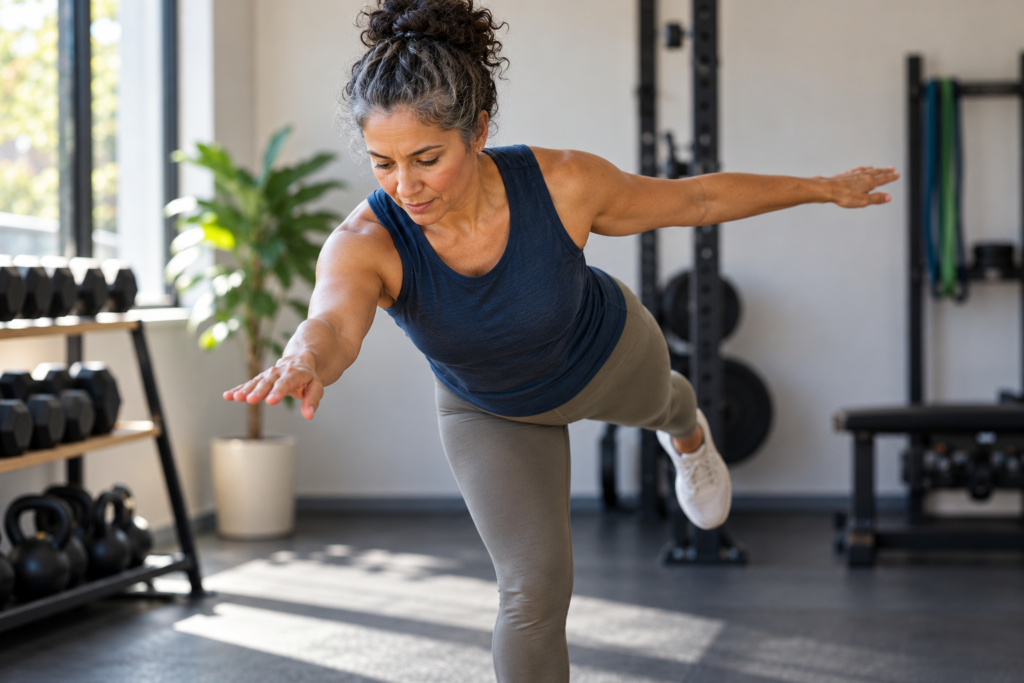
Making a mistake while you’re learning a physical skill can feel like proof that you’re not capable of doing it. But when a movement is new, getting parts of it wrong is one of the ways your brain figures out how to do it right.
This process is called motor learning, which is how we learn and improve physical skills through practice. It involves neuroplasticity, the brain’s ability to change in response to experiences. When you learn a new exercise, practice balance, or work on a movement that requires coordination, your muscles are doing the work, but your brain is also learning how to organize that movement.
One of the ways it learns is by paying attention to the difference between what it was trying to make happen and what actually happened.
What A Mistake Tells Your Brain
Every time you move, your brain is getting information about what your body is doing. Your eyes help tell it where you are in relation to your surroundings. Your inner ear detects changes in the position and movement of your head. Sensors in your muscles and joints report where different parts of your body are, and your skin gives your brain information about things like pressure and contact.
That constant stream of information is how your brain knows what actually happened when you moved.
Before you do a movement, your brain has already worked out its best estimate of what needs to happen. How much force do you need? How far does your leg need to move? How quickly should one part of your body move in relation to another?
Then the movement happens, and all of that sensory information comes back to the brain. If the result is different from what your brain expected, researchers call that difference a sensory prediction error.
The terminology sounds complicated, but the process isn’t.
If you intended to step onto a particular spot and your foot landed farther to the right, your nervous system gets information about the difference. If you were trying to control a weight and moved it too quickly, that gives it different information. Your nervous system handles this automatically, using information from what you see and feel as you move to adjust the next attempt. With practice, those repeated adjustments help the movement become more accurate and familiar. (Annual Review of Neuroscience)
Balance Makes This Easier To Understand
Balance is a good example because you can feel the correction actually happening.
Let’s say you’re standing on one leg and start leaning to the right. The sensory information coming back to your brain tells it that your position has changed, and your nervous system organizes a response to bring you back into a more stable position. That wobble gives your brain information it can use as you continue practicing.
This is one reason balance improves with practice. In a systematic review of randomized trials involving adults 65 and older, balance training improved several types of balance, including the ability to remain stable while standing and moving and to respond to unexpected changes in position. (Sports Medicine)
For practice to do anything, your balance has to be challenged enough that your body has to make adjustments. Standing on one leg, narrowing your stance, or adding a controlled movement can do that. Practicing near a counter or another stable surface lets you increase the challenge while having something nearby if you lose your balance.
The same idea applies when you’re learning a new physical skill. If the movement is too difficult to control, make it easy enough that you can pay attention to what’s happening. That might mean using a lighter weight or slowing the movement down so you can understand the sequence and adjust it as you practice.
Being A Beginner Can Feel Different After 40
By the time you’re in your 40s, 50s, or 60s, what you do physically is familiar. You’ve had years to learn how to move through your normal day, and if you work out, you probably have moves or activities you’ve been doing for a long time.
Then you try something new and suddenly you have to think about everything.
When you try something new, the movement feels awkward because your brain is trying to figure out the timing, sequence, and position your body needs to be in. You may need to slow the movement down before it starts to feel right. It’s easy to interpret that awkwardness as evidence that you’re bad at it, especially when you’re used to being competent in most areas of your life. You’ll probably decide the exercise isn’t for you or go back to doing the things you already know how to do.
But the fact that something takes practice tells you very little about your ability to learn it.
Older adults can continue to improve physical skills with training, and the brain will continue to change in response to that learning. A 2024 review examining aging, neuroplasticity, and motor learning found that although movement can become slower and less accurate with age, older adults still retain the ability to improve motor skills through practice. (Ageing Research Reviews)
So if you’re learning something new and your first attempts feel awkward, that’s exactly what they are: first attempts. Your nervous system doesn’t have the same amount of experience with that movement that it has with something you’ve done hundreds or thousands of times.
This Idea Can Be Useful With Habits Too
Changing a habit isn’t the same neurological process as learning a balance exercise, but the mistake-as-information idea still applies in a practical way.
If you decide you’re going to work out at 6:00 three evenings a week and you miss all three because your workday keeps running late, setting the same 6:00 goal again the following week isn’t going to work either. You’ve already learned that 6:00 doesn’t actually fit your schedule.
That failed attempt gave you information.
You can do the same thing if you’re trying to go to bed earlier, fit a walk into your day, or make another change that keeps falling apart in the same place. Instead of stopping at “I didn’t do it,” look at why the attempt broke down and change that part.
The next time you’re learning something physical and it doesn’t go the way you expected, pay attention to what happened and use that information on the next attempt.
Knowing how a movement is supposed to work is different from actually learning how to do it. Practice gives your nervous system the experience it needs to keep adjusting the movement.
If you want to keep working on balance, strength, mobility, and the other areas that affect how you feel and function as you get older, Living Rewired gives you a new topic to work on each month, along with a practical challenge, live coaching, and a resource to help you use it in real life.